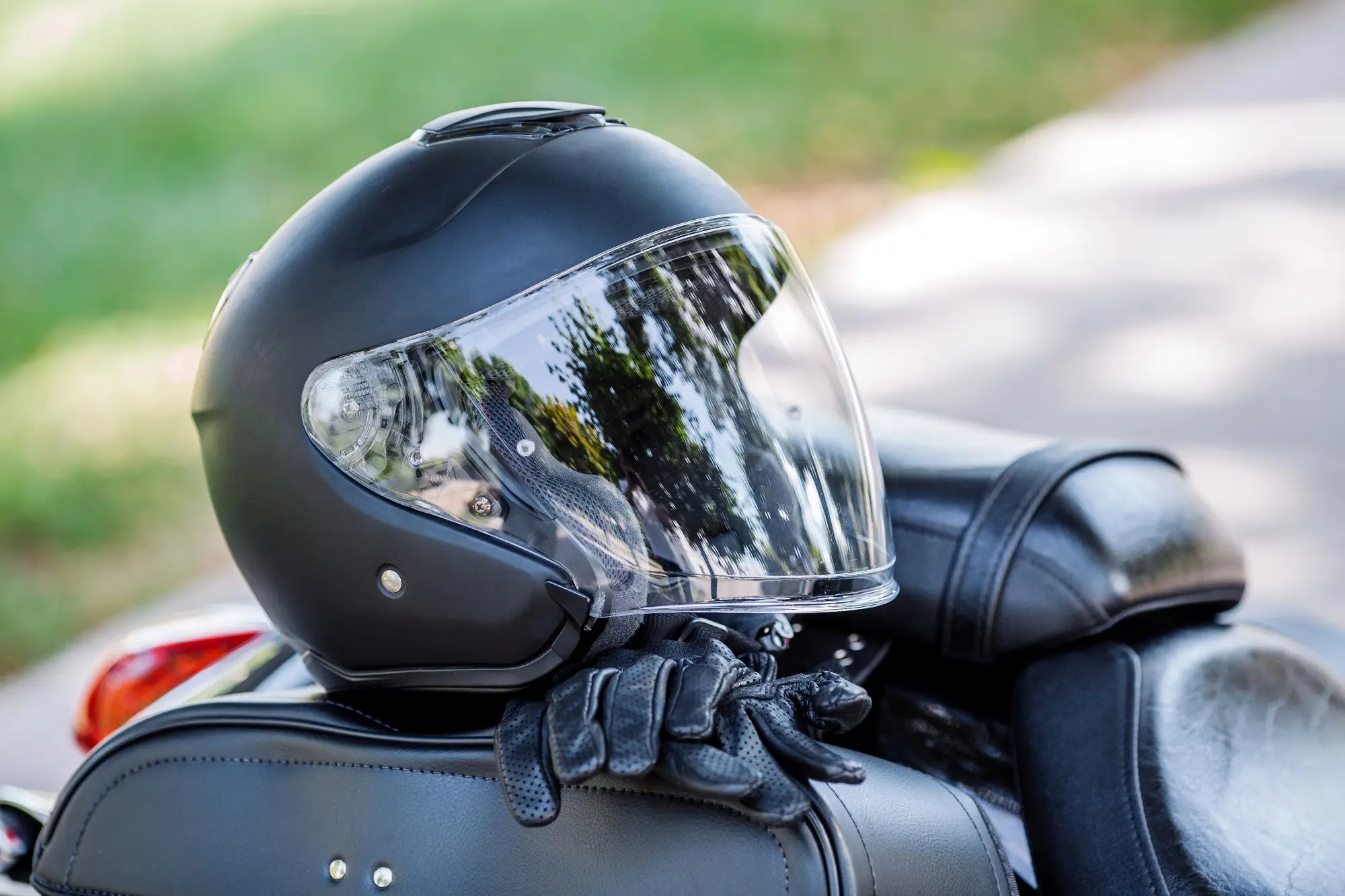
Louisiana enacted mandatory helmet laws in 2004 to address the sobering statistics of serious injuries to bikers involved in crashes. Our Shreveport motorcycle accident lawyers will cover everything Louisiana riders need to know about helmet laws, safety requirements, and how compliance with these requirements affects injury claims.
Does Louisiana Require Motorcycle Helmets?
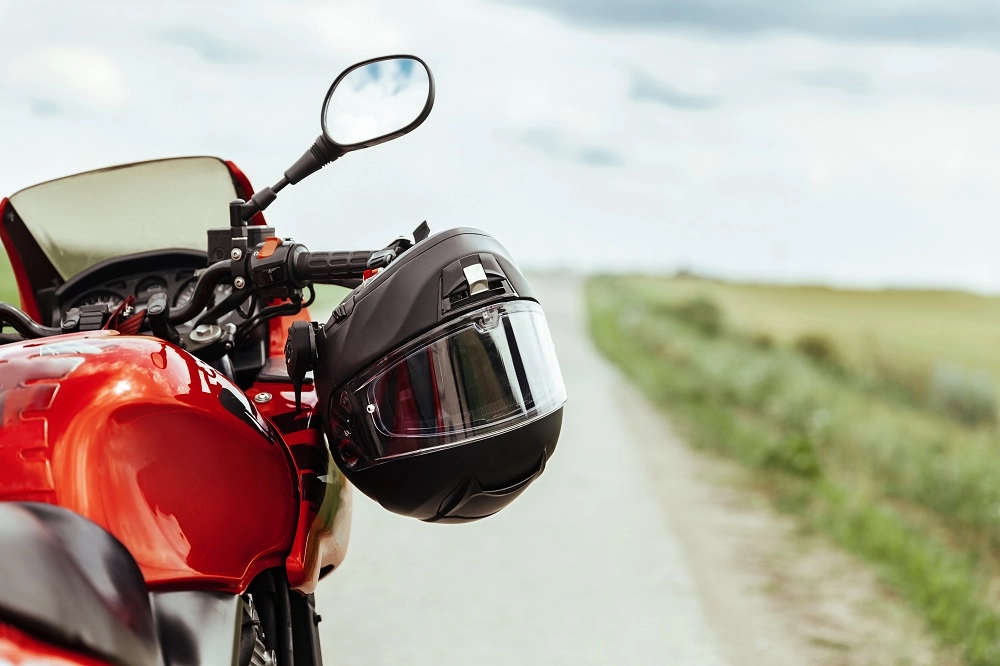
Yes. Louisiana law requires all motorcycle operators and passengers to wear approved safety helmets while riding. Under Louisiana RS 32:190, no person may operate or ride upon any motorcycle, motor-driven cycle, or motorized bicycle without wearing a properly secured safety helmet. This universal requirement applies regardless of:
- Rider age
- Years of riding experience
- Completion of safety courses
- Insurance coverage amounts
- Type of motorcycle
The law states that helmets must be "secured properly with a chin strap while the vehicle is in motion".
What Makes a Helmet Legal in Louisiana?
Louisiana law requires that motorcycle helmets meet specific standards to provide adequate protection. According to the statute, approved helmets must include all of the following components:
Required helmet features:
- Lining for shock absorption
- Padding for comfort and protection
- Visor to shield the face
- Chin strap that must be fastened while riding
Additionally, helmets must meet specifications established by the Commissioner of the Department of Public Safety. Riders should look for helmets that meet the DOT Federal Motor Vehicle Safety Standard (FMVSS) 218. The DOT symbol should appear on the outside back of the helmet.
Bicycle, skateboard, or decorative "novelty" helmets do not satisfy Louisiana's legal requirements. These alternatives lack the protection necessary for motorcycle speeds and crashes.
Exceptions to Louisiana's Helmet Requirement
While Louisiana enforces a strict helmet law, there are two specific exceptions under the current statute.
Parade and Public Exhibition Permits
Police authorities in villages, towns, cities, or parishes may issue permits exempting members of organizations from wearing helmets during public events such as Mardi Gras parades or similar exhibitions. This exemption applies only during the actual event itself, so riders must wear helmets when traveling to and from the event location.
Autocycle Safety Equipment
Riders and passengers of autocycles (three-wheeled vehicles with steering wheels and safety belts) are exempt from helmet requirements if the vehicle is equipped with a roll cage, roll bar, or similar safety structure. Examples include vehicles like the Polaris Slingshot. The safety equipment must provide protection comparable to or greater than a helmet.
No other exceptions exist under Louisiana law. Age-based exemptions, insurance requirements, or safety course completion do not waive the helmet mandate.
Louisiana Eye Protection Requirements
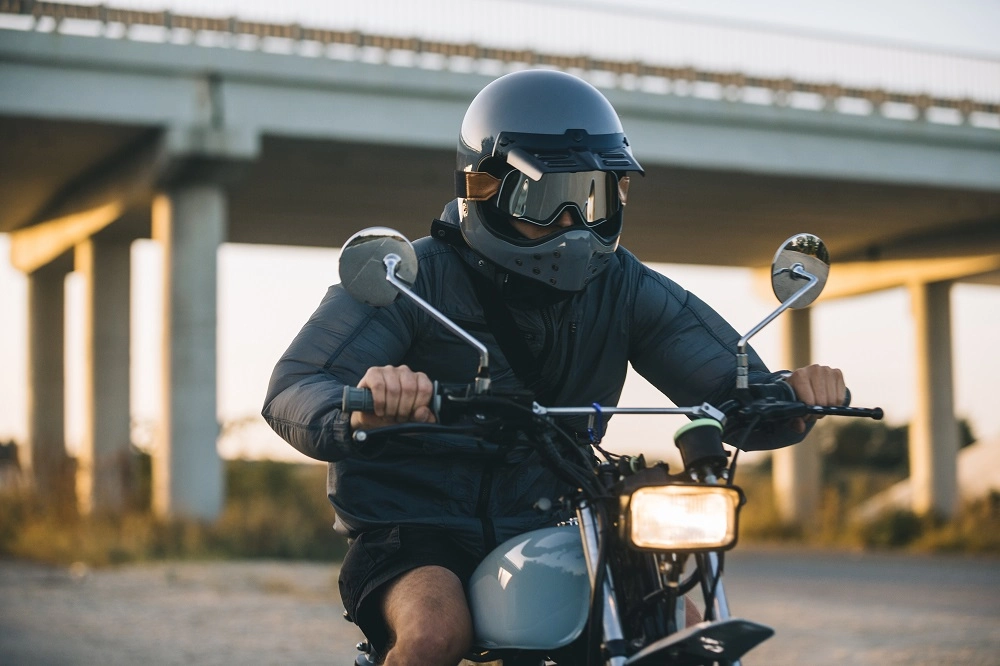
Beyond helmets, Louisiana requires additional protective gear for motorcycle operators. Under Louisiana RS 32:190.1, riders must wear eye protection unless their motorcycle has a windshield of sufficient height to provide adequate protection.
Acceptable eye protection includes:
- Goggles
- Face shields
- Safety glasses
All eye protection must meet performance specifications established by the Louisiana Department of Public Safety. The law specifically prohibits tinted eyewear at night, as visibility is significantly reduced in low-light conditions.
Additional Louisiana Motorcycle Safety Laws
Louisiana enforces several other safety regulations that motorcycle riders should be aware of. These laws work together with helmet requirements to reduce crash injuries and fatalities.
- Child passenger restrictions: Children under five years old cannot ride as passengers on motorcycles. Children over five must wear helmets and be properly seated.
- Seating requirements: All occupants must sit on a permanent, regular seat and keep both feet on footrests while the motorcycle is in motion.
- Cargo rules: Riders cannot transport cargo that restricts hand use or interferes with safe motorcycle operation.
- Lane splitting: Riding between lanes of stopped or slow-moving traffic (lane splitting) is illegal in Louisiana. Motorcyclists must stay within a single lane.
- Tinted eye protection: As noted above, tinted goggles, glasses, or face shields cannot be worn at night.
These regulations appear throughout Louisiana's motor vehicle statutes and are enforced by law enforcement statewide.
Penalties for Violating Helmet Laws
Violating Louisiana's motorcycle helmet law results in a $50 fine, including all court costs. Under Louisiana RS 32:190(F), "no other cost or fee shall be assessed against any person for a violation of this Section".
While $50 seems modest, the real consequences of riding without a helmet extend far beyond traffic fines. Unhelmeted riders face significantly higher medical costs for head injuries, potential permanent disabilities, and reduced compensation in personal injury claims. The financial impact of a severe head injury can reach hundreds of thousands of dollars in medical bills, lost wages, and ongoing care needs.
How Helmet Compliance Affects Accident Claims
Louisiana's fault system changed dramatically on January 1, 2026. The state moved from pure comparative fault to modified comparative fault with a 51% bar to recovery under Louisiana Civil Code Article 2323 as amended by House Bill 431.
This change has major implications for motorcycle accident claims, especially when helmet compliance is disputed.
Louisiana's New Modified Comparative Fault Rule (2026)
Under the new law, effective January 1, 2026:
- If you are 51% or more at fault → You recover nothing, regardless of your damages or the severity of your injuries.
- If you are 50% or less at fault → You recover damages reduced by your percentage of fault.
This represents a dramatic shift. Previously, riders could recover partial damages even if they were primarily at fault. Now, crossing that 51% threshold completely bars recovery.
How This Affects Helmet Cases
When a motorcyclist is injured while not wearing a helmet, insurance companies and defense attorneys will argue that helmet noncompliance significantly contributed to the severity of the injury.
Example: Your damages total $150,000. If the court finds you:
- 25% at fault for not wearing a helmet → You recover $112,500 (75% of damages).
- 40% at fault → You recover $90,000 (60% of damages).
- 51% at fault → You recover $0 (complete bar to recovery).
Critical points to remember:
- You can still file a claim even if you weren't wearing a helmet.
- Not wearing a helmet didn't cause the accident, but another driver's negligence did.
- Insurance companies will aggressively argue to avoid paying anything.
- Strong legal representation is now more important than ever.
Types of Damages in Louisiana Motorcycle Accidents
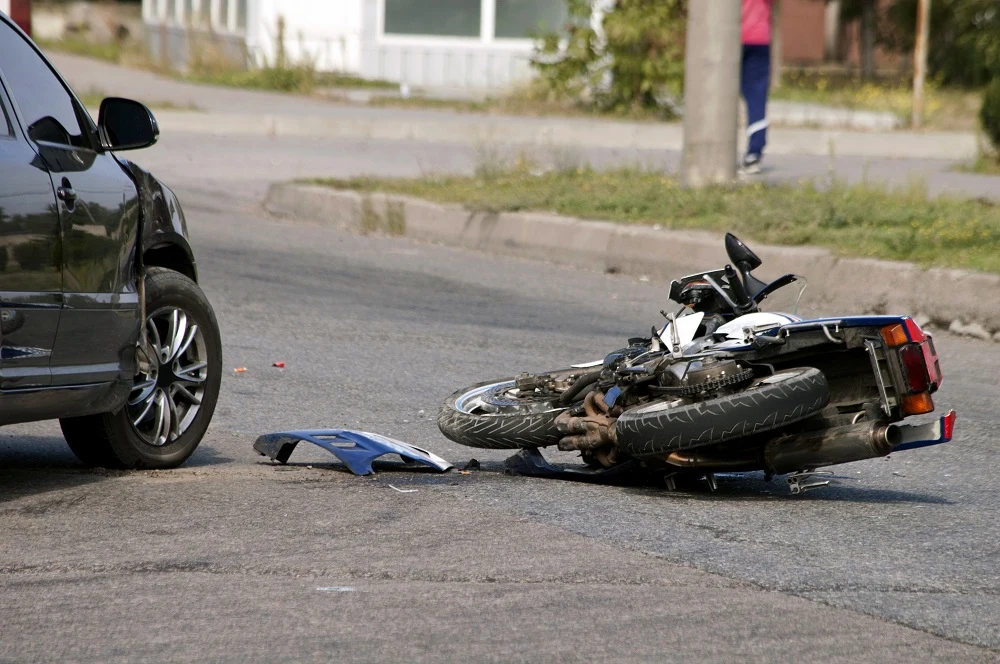
When another driver's negligence causes a motorcycle accident, Louisiana law allows injured riders to seek compensation for various categories of harm. These damages fall into two main types.
Economic damages cover measurable financial losses:
- Emergency medical treatment
- Hospitalization and surgery
- Physical therapy and rehabilitation
- Prescription medications
- Medical equipment and assistive devices
- Lost wages from missed work
- Reduced earning capacity for permanent injuries
- Property damage to your motorcycle and gear
- Home modifications if disabilities result
Non-economic damages address less tangible but equally real harm:
- Pain and suffering from injuries
- Emotional distress and mental anguish
- Loss of enjoyment of life and activities
- Scarring and permanent disfigurement
- Loss of consortium (impact on relationships with family members)
Wrongful Death Damages
If a motorcycle crash results in a fatality, surviving family members may recover additional damages, including funeral and burial expenses, loss of financial support, loss of companionship, and medical expenses incurred before death. Louisiana wrongful death law provides specific guidelines for who can file these claims and what damages are recoverable.
Time Limits for Filing Motorcycle Accident Claims
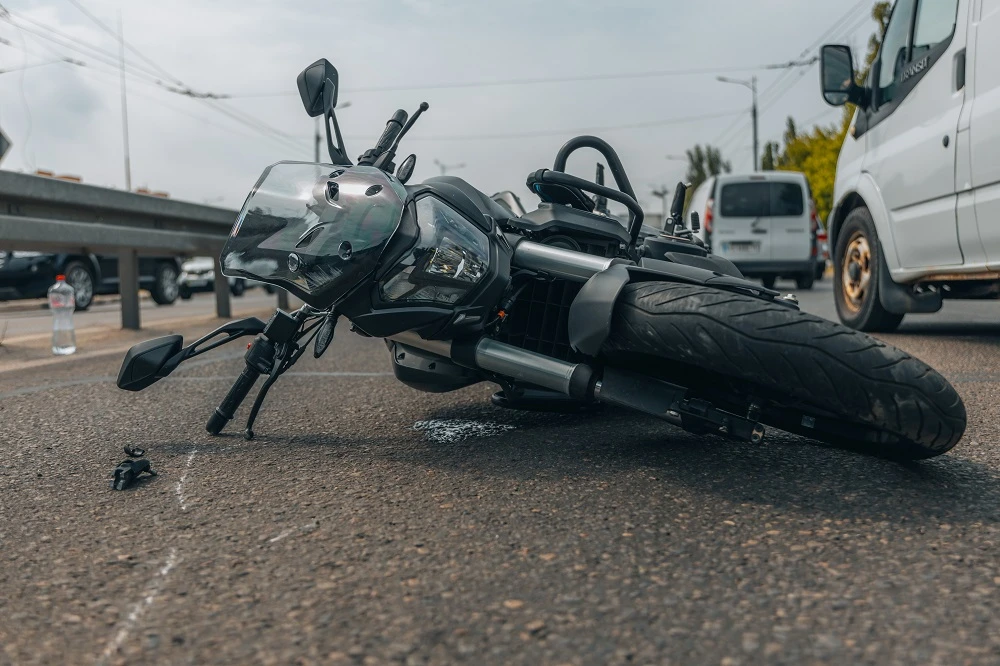
Louisiana law imposes strict deadlines for filing personal injury lawsuits. Under Louisiana Civil Code Article 3492, "Delictual actions are subject to a liberative prescription of two years".
This means you have exactly two years from the accident date to file your lawsuit in court. Missing this deadline typically results in losing your right to seek compensation entirely, regardless of injury severity or how clearly another driver was at fault.
Exceptions and special rules:
- Injuries to minors may have extended deadlines.
- Cases involving government entities often have shorter notice requirements.
- Wrongful death claims run from the date of death, not necessarily the accident date.
Don't wait to consult with an attorney. Evidence disappears, witnesses' memories fade, and defendants take steps to protect themselves legally. Early legal involvement strengthens your case and preserves your rights.
The "No Pay, No Play" Rule (RS 32:866)
In Louisiana, failing to carry basic liability insurance can be as costly as the accident itself. Under the "No Pay, No Play" law, uninsured motorists are prohibited from collecting a portion of their damages, even if the other driver was 100% at fault.
- Property damage: You cannot collect the first $100,000 in damages to your motorcycle.
- Bodily injury: You cannot collect the first $100,000 for your medical bills and personal injuries.
Combined with the modified comparative fault rule, riding without insurance or a helmet creates a significant financial risk. If you are uninsured, you must pay for your initial recovery out of pocket before you can even begin to seek damages from the at-fault party.
Louisiana Insurance Requirements for Motorcyclists
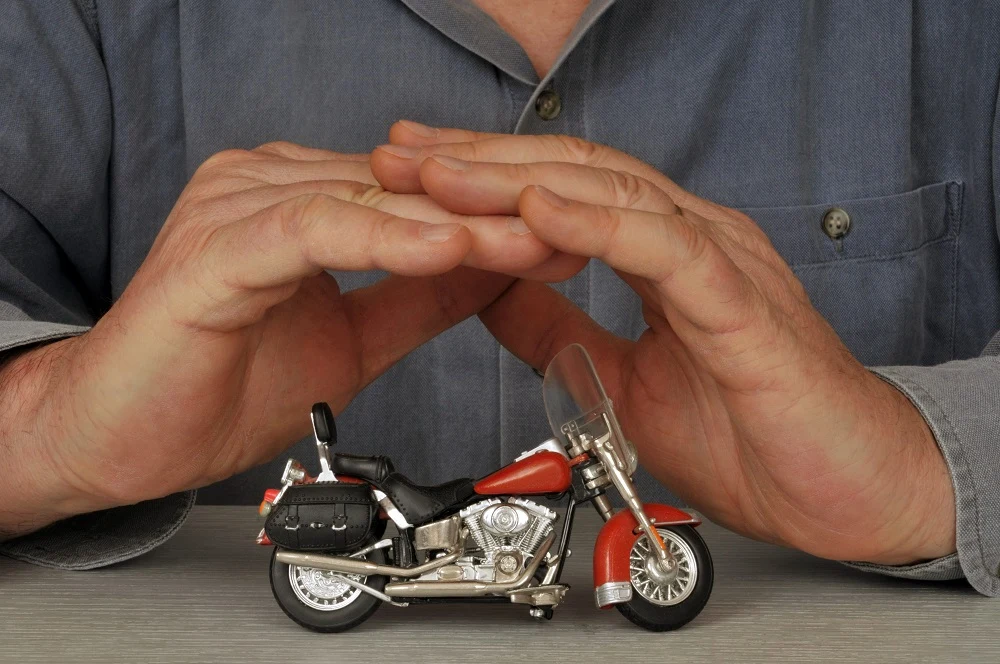
All Louisiana motorcyclists must carry minimum liability insurance. The state requires:
- $15,000 per person for bodily injury
- $30,000 per accident for bodily injury
- $25,000 for property damage
These minimum amounts often prove insufficient when serious injuries occur. Many riders carry additional coverage types to protect themselves more thoroughly:
- Uninsured/underinsured motorist coverage protects you when at-fault drivers lack adequate insurance — a frequent problem in Louisiana.
- Medical payments coverage pays medical expenses regardless of who caused the accident.
- Collision coverage covers damage to your motorcycle from accidents.
- Comprehensive coverage protects against theft, vandalism, weather damage, and non-collision incidents.
Insurance companies will review helmet law compliance when processing claims. Documented compliance with Louisiana's helmet law strengthens your negotiating position and demonstrates responsible riding practices.
What to Do After a Louisiana Motorcycle Accident
If you're involved in a motorcycle crash, take these steps to protect your health and legal rights.
- Seek immediate medical attention: Get evaluated by medical professionals even if you feel fine. Some injuries, particularly head trauma, don't show immediate symptoms. Medical records created shortly after the accident provide vital evidence for your claim.
- Report the accident: Contact law enforcement and obtain an official police report. Louisiana law requires accident reports when injuries occur or when property damage exceeds $500.
- Document the scene: If physically able, photograph the accident location, all vehicles involved, your injuries, road conditions, traffic signs, and any visible hazards. Collect contact information from witnesses.
- Preserve physical evidence: Keep your damaged helmet, torn clothing, and other gear. These items demonstrate the severity of the impact and can support your damage claims.
- Notify your insurance: Report the accident to your insurance company, but avoid providing detailed recorded statements or accepting quick settlement offers without legal guidance.
- Avoid social media: Do not post about the accident, your injuries, or your activities on social platforms. Insurance companies monitor these sites for content they can use to dispute your claims.
- Consult an attorney: Speak with a motorcycle accident attorney before providing extensive information to insurance adjusters. Insurance companies have legal teams working to minimize payouts — you need representation, too.
Recent Louisiana Helmet Law Debates
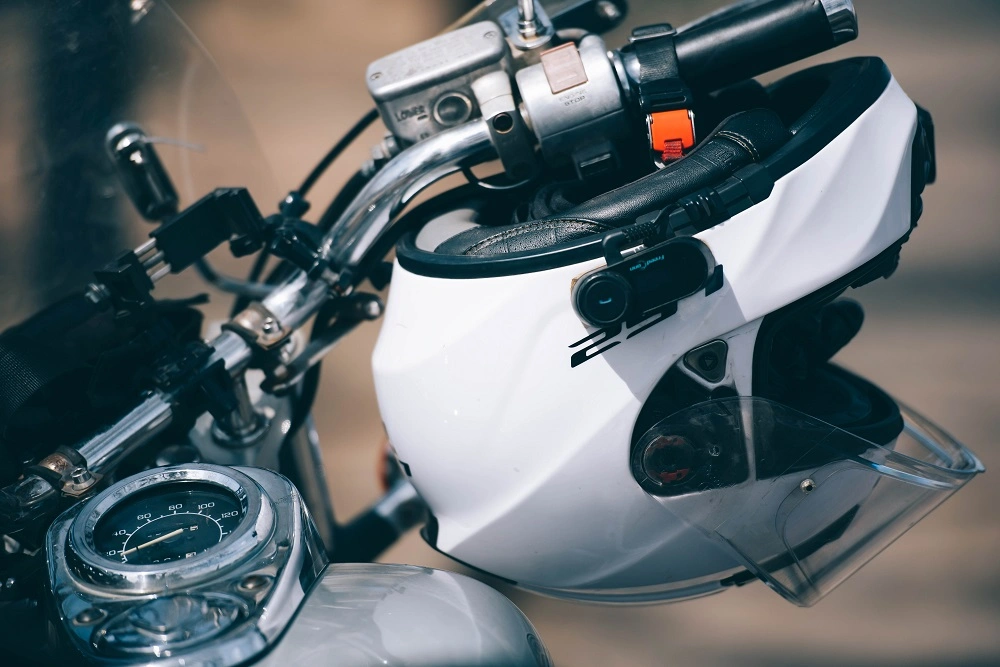
During the 2024 legislative session, Louisiana's House Transportation Committee voted 10-3 to repeal the state's universal helmet law. The full House ultimately voted for repeal, but the Senate failed to bring the legislation to a vote before the session ended.
As of January 2026, Louisiana's universal helmet requirement remains in full effect. All motorcycle operators and passengers must wear DOT-approved helmets regardless of age, experience, or other factors. Riders should monitor potential legislative changes through the Louisiana Highway Safety Commission website.
Get Legal Help from Shreveport Motorcycle Accident Attorneys at Rice & Kendig
Motorcycle accident cases involving serious injuries require experienced legal representation. Insurance companies deploy aggressive tactics to minimize settlements, often arguing that helmet noncompliance significantly contributed to injury severity.
At Rice & Kendig Injury Lawyers, our Shreveport motorcycle accident attorneys understand Louisiana's helmet laws, modified comparative negligence rules, and insurance company strategies. Contact us today at 318-222-2772 to schedule a free consultation!

trusted advocate in Louisiana
and Texas.
Turn to Rice & Kendig Injury Lawyers for Proven Results
Louisiana's helmet laws can impact your compensation. Our Shreveport motorcycle accident attorneys at Rice & Kendig fight to protect your rights, whether you wore a helmet or not.
or Call Us
(318) 222-2772
Heading
Struggling After Your Accident? We're Here to Help.
At Rice & Kendig, our Shreveport car accident lawyers have more than 40 years of experience helping clients receive the justice and compensation they deserve. Get your free case review now!
No Fee Unless We Win For You
or Call Us
(318) 222-2772

