
When your family loses someone because of another person’s actions, the legal process can feel overwhelming. You may need answers to questions about who can file, how much time you have, which records matter, and whether the case may settle or go to court.
Rice & Kendig Injury Lawyers helps families in Shreveport and across Louisiana take the first legal steps after a fatal accident. Our wrongful death attorneys can review what happened, explain your rights, and help you prepare a lawsuit for wrongful death while your family focuses on immediate needs.
This guide explains what to do first, what Louisiana law says, how these cases are proven, and what families can expect once the legal process begins.
Quick Answer
To prepare for a lawsuit for wrongful death in Louisiana, you need to confirm who can file, check the deadline, save evidence, identify all at-fault parties, avoid giving recorded statements to any insurance company, and don’t accept any quick settlement offers before a thorough legal review. A strong claim must connect the defendant’s actions to the death and the family’s losses.
What Makes a Death Legally “Wrongful” in Louisiana
A wrongful death case may exist when a person dies because of another party’s fault. That fault may involve careless conduct, reckless conduct, unsafe business practices, or intentional harm.
A lawsuit for wrongful death may arise from:
- A fatal car, truck, motorcycle, pedestrian, or bicycle crash
- A drunk driving crash
- A dangerous property condition
- A defective product
- Medical malpractice
- Unsafe work conditions
- Violence or intentional misconduct
Louisiana Civil Code Article 2315.2 allows certain family members to bring a wrongful death action when a person dies “due to the fault of another.” The CDC reports that unintentional injuries were the third leading cause of death in the United States in 2024.
Step 1: Confirm Who Has the Right to File

Louisiana does not allow every relative or friend to file a wrongful death lawsuit. The law sets a specific order.
The right to file generally belongs to:
- The surviving spouse and/or children
- The surviving parents, if there is no spouse or child
- The surviving siblings, if there is no spouse, child, or parent
- The surviving grandparents, if there is no spouse, child, parent, or sibling
Adopted family members may also qualify under Louisiana law. A parent who abandoned the deceased during childhood may lose the right to bring a claim.
This order matters because family conflict can delay a case. Before filing, the family should identify who has legal standing and whether more than one eligible person may be part of the claim.
Family members may also need to address how to divide a wrongful death settlement if more than one eligible person has a claim.
Step 2: Check the Filing Deadline
Under current Louisiana Civil Code Article 2315.2, a wrongful death action generally prescribes one year from the date of death or two years from the date the injury or damage was sustained, whichever is longer.
Families should not assume they always have two full years. The deadline can depend on the type of case, the date of injury, the date of death, and whether medical malpractice laws apply. The deadline rules for wrongful death claims differ from the broader Louisiana personal injury filing deadlines.
Step 3: Identify Every Party Who May Share Fault
A fatal accident may involve more than one responsible party. Naming the correct defendants matters because it can affect liability, insurance coverage, and the family’s ability to recover compensation.
For example:
- A distracted driver may be liable for a fatal crash.
- A trucking company may be liable if it hired an unsafe driver, ignored safety rules, or failed to maintain a truck.
- A property owner may be liable if unsafe conditions caused a fatal fall or assault.
- A product manufacturer may be liable if a defective tire, vehicle part, or safety device contributed to the death.
- A medical provider may be liable if negligent care caused the death.
- An employer may be liable when an employee causes a fatal injury while working.
Louisiana also uses comparative fault rules. Under Civil Code Article 2323, if the person who suffered injury, death, or loss is found 51% or more at fault, recovery may be barred. If the fault is below 51%, damages may be reduced by whatever percentage of fault is attributed to the injured party.
Because defendants and insurers may try to shift blame, early investigation can make a major difference. In fatal crash cases, how fault works in Louisiana accident claims can affect both liability and compensation.
Step 4: Save the Evidence That Proves the Case
Evidence can disappear quickly after a fatal accident. Video footage may be erased, vehicles may be repaired, road conditions may change, and witnesses may become harder to find.
Families should save or request:
- Death certificate
- Police report or crash report
- Medical records
- Autopsy or coroner’s report, if available
- Photos and videos from the scene
- Vehicle photos
- Names and phone numbers of witnesses
- Insurance letters
- Employer and wage records
- Funeral and burial receipts
- Dash cam, surveillance, or body cam footage
- Text messages, emails, or other communications related to the incident
Do not throw away damaged personal property, clothing, helmets, safety gear, vehicle parts, or photos until a lawyer reviews them. These items may help show how the death happened.
Many of the same records used as evidence used to prove fault after a crash may also be relevant in a fatal accident case.
Step 5: Prove the Core Elements of the Claim
A wrongful death lawsuit usually turns on four legal elements: duty, breach, causation, and damages. These elements help show not only that the defendant acted wrongfully, but also that the wrongful conduct caused the death and created measurable losses for the family.
Duty
The family must show that the defendant had a legal duty to act safely or reasonably. Drivers, property owners, trucking companies, manufacturers, and medical providers may all owe duties depending on the facts.
Breach
The family must show that the defendant violated that duty. Examples include speeding, driving drunk, texting while driving, ignoring safety rules, failing to fix a hazard, or selling a defective product.
Causation
The family must connect the defendant’s conduct to the death. This is often one of the most disputed parts of a case. Medical records, crash reconstruction, witness statements, expert reports, and physical evidence may all help prove causation.
Damages
The family must show the losses caused by the death. These may include financial losses, funeral expenses, loss of support, and loss of the family relationship. Damages help show the full impact of the death on surviving family members, both financially and personally.
Step 6: Document the Family’s Financial and Personal Losses

A wrongful death claim focuses on what the surviving family members lost because of the death. A related survival action may cover what the deceased person suffered between the injury and death.
Depending on the facts, recoverable losses may include:
- Funeral and burial expenses
- Medical bills tied to the fatal injury
- Loss of income and financial support
- Loss of household services
- Loss of love, companionship, and guidance
- Mental anguish suffered by surviving family members
- Pain and suffering the deceased experienced before death, through a survival action
Louisiana Civil Code Article 2315.1 explains survival actions.
If the death involved an intoxicated motor vehicle defendant, Louisiana Civil Code Article 2315.4 may allow exemplary damages (punitive damages) when the injuries were caused by wanton or reckless disregard by an intoxicated driver.
Case value depends on the evidence, the family’s losses, and the facts behind the death, so the average wrongful death settlement in Louisiana should never be treated as a guarantee. Settlement structure can also raise questions about whether wrongful death settlements are taxable.
Step 7: Know What Happens After the Case Begins
The timeline depends on the facts, but many wrongful death cases follow a similar path. Families can better navigate the legal process by identifying the primary phases of a claim, which often clarifies why certain cases proceed more slowly than others.
Case Review
One of our exceptional lawyers will apply their advanced knowledge and skill to review the family relationship, filing deadline, facts, any applicable insurance policies, and all the initial evidence. This step helps determine whether the family has a valid claim and what information is still missing.
Investigation
The legal team may gather records, interview witnesses, inspect the scene, review photos and videos, check insurance coverage, and consult experts. The goal is to identify what happened, who may be responsible, and what evidence can support the claim.

Claim or Lawsuit
Some cases begin with an insurance claim. Others require filing a lawsuit quickly to preserve rights, obtain records, or stop delay tactics. Filing does not always mean the case will go to trial, but it may be necessary to move the case forward.
Discovery
Both sides exchange information. This may include written questions, document requests, depositions, medical records, expert reports, company policies, and insurance materials. Discovery often reveals whether the defendant followed safety rules, had prior notice of a hazard, or has evidence that supports the family’s claim.
Settlement Talks or Mediation
Many wrongful death cases settle before trial. A lawyer can compare any offer against the full value of the claim, the available evidence, and the risks of going forward. Mediation may also give both sides a structured chance to resolve the case before a judge or jury hears it.
Trial
If the other side denies fault or refuses to offer fair compensation, the case may proceed to trial. A judge or jury then decides fault and damages. Trial is not required in every case, but families should prepare as though the case may need to be proven in court.
Step 8: Prepare for Insurance Company Pushback
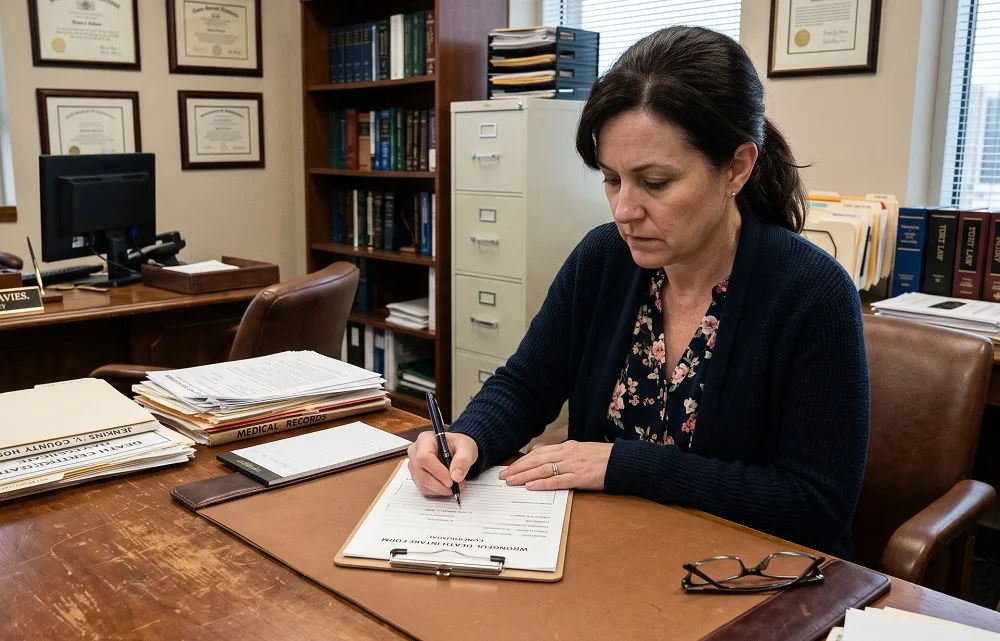
Insurance companies do not simply pay because a death occurred. They review the facts, look for weaknesses, and may try to limit the amount they owe.
They may argue that:
- The deceased caused or contributed to the incident
- Another party was responsible
- The death was not caused by the defendant’s conduct
- The medical evidence does not support the claim
- The family waited too long to act
- The claimed monetary damages are too high
- The defendant had no legal duty
These arguments do not always succeed, but families should be prepared for them. The stronger claims usually have records, witness support, expert review when needed, and a clear damages story.
Talk to Rice & Kendig Injury Lawyers About Your Family’s Next Step
A wrongful death claim cannot undo the loss, but it can help your family seek accountability, financial stability, and answers about what happened. Rice & Kendig Injury Lawyers can review your case, explain Louisiana’s filing deadlines, and help you decide whether to move forward with a lawsuit for wrongful death. To speak with our team, contact us for a free consultation.

trusted advocate in Louisiana
and Texas.
Take the First Step Toward Accountability
You should not have to face insurers and legal deadlines alone. Rice & Kendig Injury Lawyers can help protect your family’s claim from the beginning.
or Call Us
(318) 222-2772
Heading
Struggling After Your Accident? We're Here to Help.
At Rice & Kendig, our Shreveport car accident lawyers have more than 40 years of experience helping clients receive the justice and compensation they deserve. Get your free case review now!
No Fee Unless We Win For You
or Call Us
(318) 222-2772