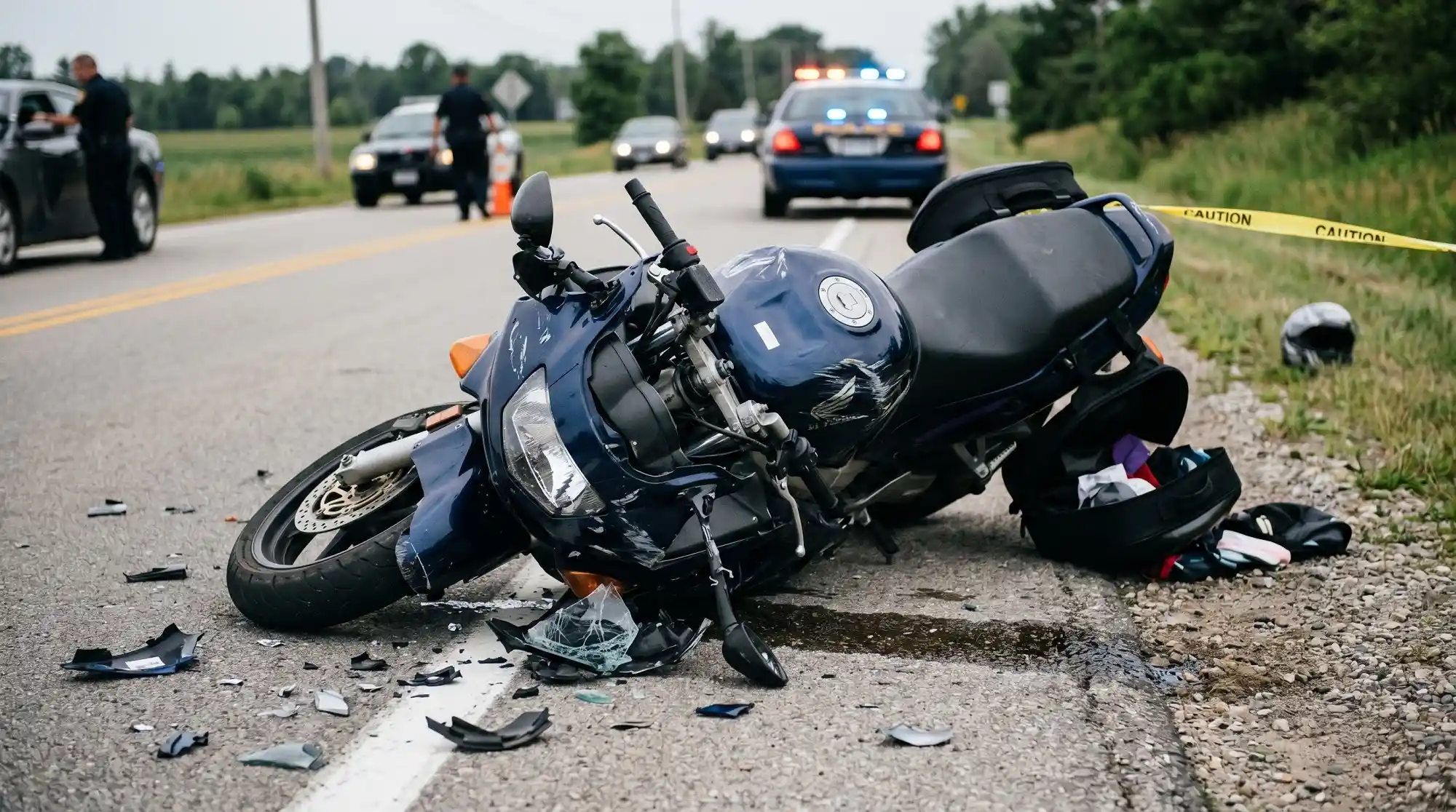
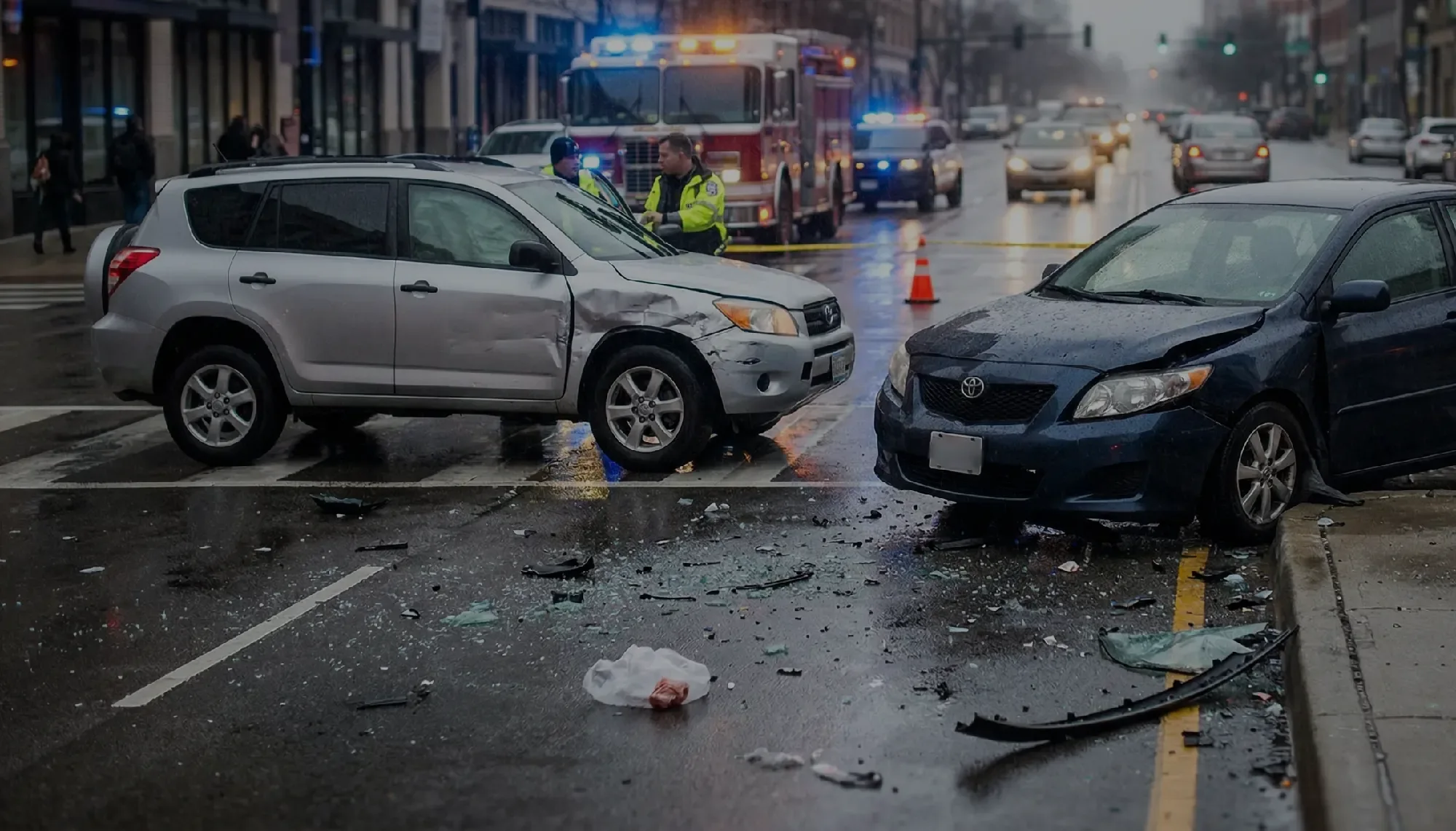
The issue of who was at fault in a yellow-light accident is rarely straightforward. These cases usually come down to right-of-way, timing, speed, whether a driver could stop safely, and what the evidence shows after the crash.
In Louisiana, the key issue is not simply whether the light was yellow, but whether the driver acted reasonably as the signal changed. The Shreveport car accident lawyers at Rice & Kendig Injury Lawyers have spent decades untangling exactly these disputes.
Who Is Usually at Fault in a Yellow Light Accident
A yellow light warns that the green phase is ending and red is about to follow. It is not permission to speed up or a signal to brake abruptly. As the Federal Highway Administration explains, a steady circular yellow means the green movement is being terminated.
Under La. R.S. 32:232, the key question is whether the driver could stop safely before entering the intersection. If not, the driver may proceed with caution.
Two questions drive most fault analyses:
- Who had the right-of-way at the moment of impact?
- Could the driver have stopped safely before entering the intersection?
For example, imagine a driver heading south on Airline Drive in Bossier City when the light turns yellow. If that driver speeds up, enters after the light turns red, and hits a vehicle that is lawfully crossing, fault will likely weigh heavily against the late-entering driver. In these cases, the evidence gathered in the first hours after the crash can be critical to proving fault.
How Fault Is Determined at Yellow Light Intersections
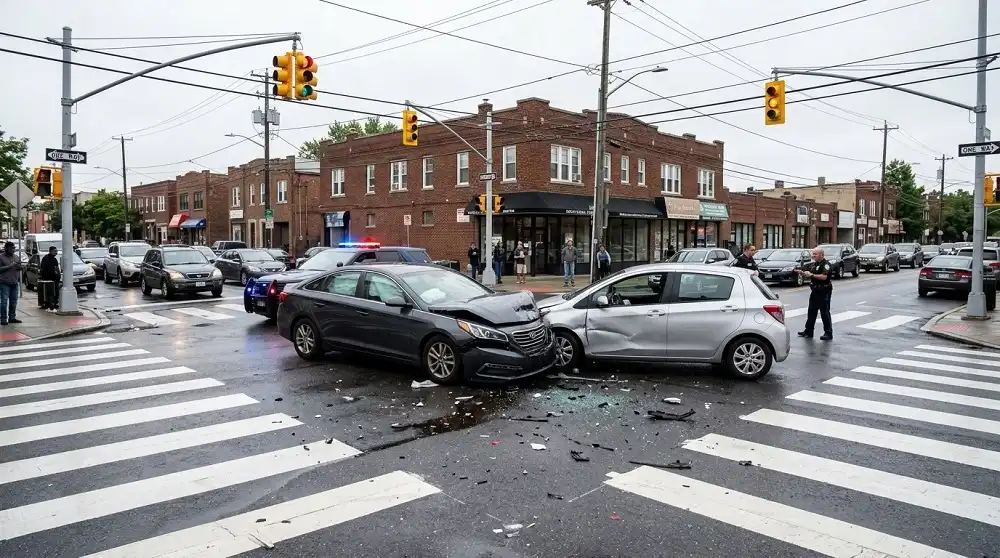
The question of fault in a yellow-light accident is usually not a simple one. Courts and insurance adjusters weigh several factors together.
Left-Turning Drivers Must Yield to Oncoming Traffic
A left-turning driver must yield to oncoming traffic already in or approaching the intersection. This rule applies whether the signal is green, yellow, or in transition. When a turning driver misjudges the speed of oncoming traffic and collides, fault usually falls on the turning driver, even if that driver entered on a yellow light.
Rear-End Crashes and Sudden Braking
Rear-end crash cases at yellow lights involve a different analysis. The trailing driver is often at fault for following too closely or failing to react in time. However, if the lead driver brakes suddenly at a yellow light where stopping is not safe, some fault may shift. Courts examine the following: distance, speed, and whether the braking was reasonable.
A Simple Way to Think About Fault in a Yellow Light Auto Accident
Yellow-light crashes usually come down to what each driver did in the few seconds before impact. The clearest question is whether the driver used the yellow light as a warning to stop or clear the intersection safely, or tried to beat the red.
The MUTCD Part 4 Standards confirm that the yellow change interval of three to six seconds is designed to give drivers time to either stop or clear, not to race through.
What Louisiana Law Says About Yellow-Light Accident Fault
The strongest version of this page should not talk vaguely about traffic rules. It should connect the discussion of liability directly to Louisiana statutes.
- La. R.S. 32:232 explains the legal meaning of a steady yellow signal.
- La. R.S. 32:122 sets out the left-turn yield rule.
- La. R.S. 32:104 addresses turning movements, signaling, and sudden decreases in speed.
Those rules matter because yellow-light cases usually come down to one or more of these factual questions:
- Who had the right of way?
- Could the driver stop safely?
- Did someone accelerate instead of slowing?
- Did the left-turning driver misjudge the hazard?
- What do the video and vehicle data show?
Evidence That Proves a Yellow Light Accident
A police report documents the initial facts, but it does not decide civil fault. Insurance adjusters weigh it heavily, yet officers sometimes note only what drivers reported, not what the physics show. That gap is where an independent investigation matters.
Key evidence sources include:
- Traffic camera footage from city-managed signals near locations like the Texas Street Bridge or Line Avenue;
- Dash cam recordings from either vehicle;
- Witness testimony from bystanders, nearby businesses, or other drivers;
- Skid marks and vehicle damage patterns that reveal pre-impact speed and braking;
- Signal timing records from the municipal traffic management system.
The MUTCD signal standards establish the engineering baseline courts use when evaluating whether a driver had adequate time to stop. Footage from traffic cameras is often overwritten within 30 to 72 hours. Skid marks fade with rain, particularly during the heavy weather common in Northwest Louisiana winters.
Insurance Claims and Shared Fault in Louisiana
Louisiana now uses a modified comparative-fault system. Under Civil Code article 2323, damages are reduced by a person’s percentage of fault, and a person who is 51% or more at fault cannot recover damages in an ordinary negligence case.
A shared-fault outcome may happen when:
- A left-turning driver turned on a yellow light, but the oncoming driver was speeding.
- A driver stopped for the yellow, but did so abruptly and unsafely.
- One driver entered the intersection late on a yellow, while the other entered too aggressively.
- Video and witness accounts support blame on both sides.
For example, if total damages are valued at $80,000 and the driver is found 30% at fault, recovery would be $56,000. That same fault analysis often plays a major role in determining the value of average car accident settlements during negotiations.
Insurance adjusters will review your recorded statement, photos, vehicle damage, and the police report for anything suggesting you sped up, failed to stop when you could have, or admitted fault at the scene. Do not guess about the light color, and do not apologize.
What You Do Right After the Crash Can Make a Difference
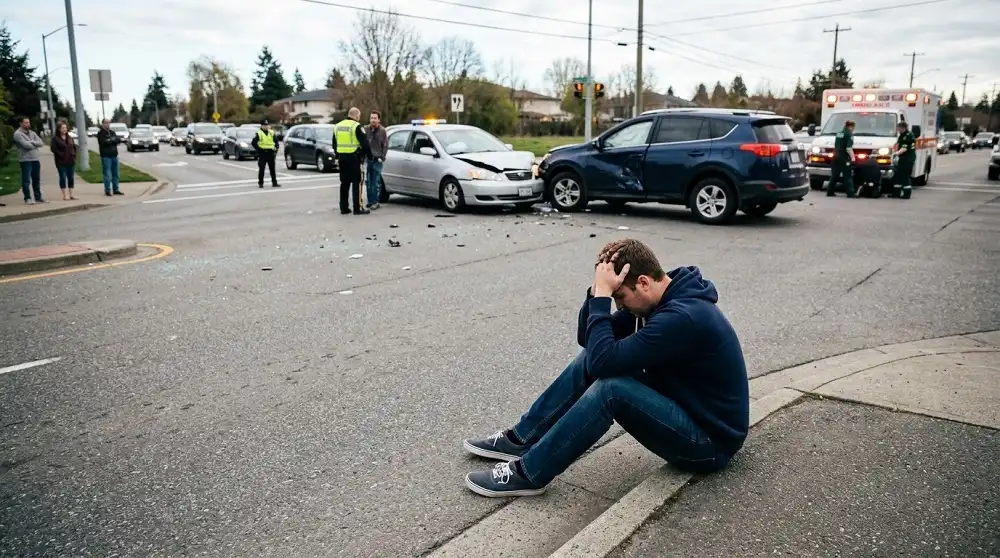
The steps to take after a crash apply directly to yellow light collisions. Follow this checklist:
- Move to safety if the vehicle is drivable and the roadway is dangerous.
- Call 911 so an officer can document the scene and file the accident report.
- Photograph everything — signal positions, skid marks, vehicle damage, and street signs.
- Identify witnesses and collect contact information before they leave.
- Seek medical care promptly, even if injuries feel minor.
Preserve any dashcam footage immediately and avoid deleting texts, navigation app data, or call logs. Louisiana law requires an accident report when damage exceeds $1,000. Hidden injuries such as soft tissue damage or concussions may not appear for days, and delays create gaps that insurers use to dispute claims.
Who Caused a Yellow Light Crash Is Fact-Specific, Not Automatic
Fault in a yellow light crash is fact-specific, not automatic. Key factors include timing, speed, and right-of-way, with evidence from the first 72 hours often proving decisive. Ultimately, liability hinges on whether a driver could safely stop, entered the intersection legally, or took an avoidable risk to beat the signal.
Rice & Kendig Injury Lawyers has handled motor vehicle accident and personal injury cases throughout Northwest Louisiana for decades, helping clients in Caddo, Bossier, and surrounding areas address insurance disputes and contested fault claims. Contact us to speak with an attorney about your intersection collision.

trusted advocate in Louisiana
and Texas.
Hit at the Intersection? Take Action Now.
Rice & Kendig Injury Lawyers helps crash victims move fast, protect key evidence, and pursue the compensation they may be owed. Request your free case review today.
or Call Us
(318) 222-2772
Heading
Struggling After Your Accident? We're Here to Help.
At Rice & Kendig, our Shreveport car accident lawyers have more than 40 years of experience helping clients receive the justice and compensation they deserve. Get your free case review now!
No Fee Unless We Win For You
or Call Us
(318) 222-2772