Shreveport’s crash risk is not spread evenly across the day. Some hours are simply more dangerous than others, creating a "perfect storm" where traffic congestion, driver fatigue, and fading visibility overlap. As fatalities in our city rose by approximately 13% in 2025, many residents are asking: when do most fatal traffic accidents happen?
At Rice & Kendig, our car accident lawyers have analyzed Louisiana traffic accident data that reveals a sobering trend: while injury crashes are highest during the afternoon rush hour, fatal crashes occur more frequently in the late evening and early morning. For Caddo Parish drivers, the "deadliest hour" isn't just a single moment, but a high-risk window that demands extreme caution.
The Most Dangerous Time to Drive in Shreveport
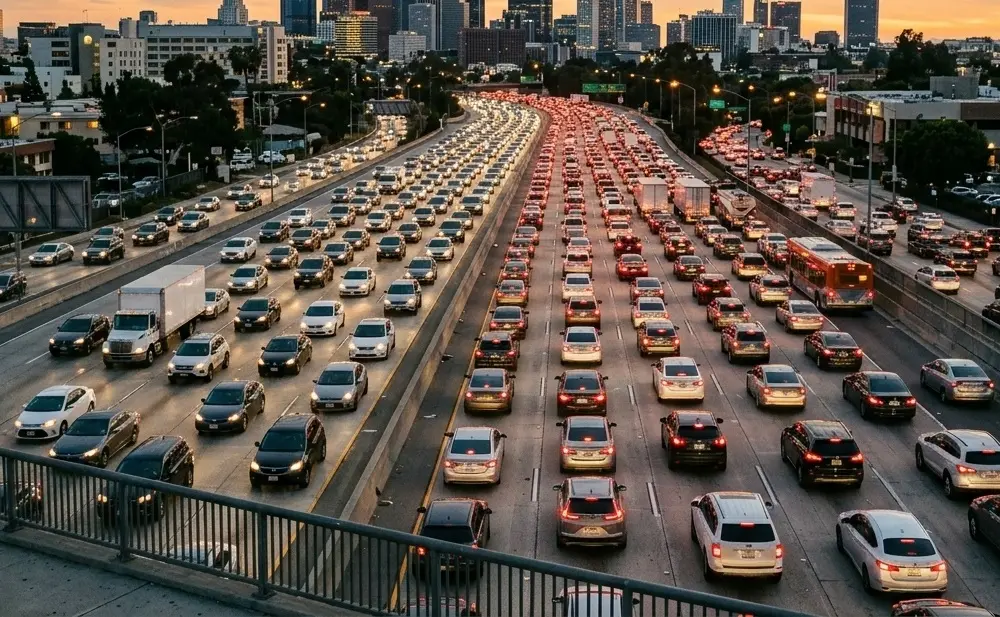
If you are looking for a specific window of risk, the strongest takeaway is this: the most dangerous driving period in Shreveport generally runs from late afternoon into the evening.
Data from the LSU Center for Analytics & Research in Transportation Safety (CARTS) highlights a critical distinction of which hours most fatal traffic collisions occur:
- Injury crashes: Peak during the afternoon rush hour, when traffic volume is highest.
- Fatal crashes: Occur more frequently in the late evening and early-morning hours, particularly on weekends.
That distinction matters. The busiest hour is not always the deadliest one. In practical terms, the “deadliest hour” is better understood as a deadliest stretch of hours, or a period when heavy traffic, fatigue, distraction, speed, and lower visibility begin to overlap.
In 2025, Shreveport police reported over 7,550 total accidents. The shift from high-volume afternoon collisions to high-speed, high-severity crashes later at night helps define the local safety landscape.
Why Late-Day Traffic Is More Lethal
Understanding why the risk rises after 4 p.m. is key to staying safe. Several factors converge during this window:
- The “post-work” fatigue factor: Drivers heading home are often mentally drained, which can lead to slower reaction times, missed signals, and poor split-second decisions.
- Visual overload and low light: As daylight fades, spotting pedestrians, stopped vehicles, and turning traffic becomes harder. This is especially dangerous on wide commercial corridors where retail signage, multiple entrances, and dense traffic can create serious information overload for drivers.
- Rush hour pressure: Heavy volume on roads like I-20, I-49, and major arterial streets leads to unsafe lane changes, aggressive turns, and stop-and-go chain-reaction collisions.
- More severe crashes later in the day: Louisiana traffic data show a useful pattern: injury crashes peak during rush hour, but fatal crashes peak later in the evening and early morning. That is one reason late-day traffic deserves special attention from both drivers and injury victims.
- Weekend risk increases: Timing is especially important on weekends. The most severe crashes are more likely to happen on Friday through Sunday, especially during the evening and before-midnight hours, when speeding, distraction, and impaired driving become more common.
Top 3 Shreveport Hotspots: Roads That Demand Caution
A dangerous hour is only part of the story; road design and corridor pressure matter just as much.
1. Youree Drive (LA 1)
Youree Drive remains the highest-pressure corridor in the city. In 2025, the DOTD completed a $3.8 million rehabilitation project on a three-mile section of Youree Drive to address these safety concerns. Despite improvements, intersections like Youree Drive & East 70th Street saw 157 incidents in 2024 alone. Recent city alerts also highlight a tragic rise in fatal pedestrian crashes along this stretch.
2. West Bert Kouns Industrial Loop & Mansfield Road
Cited as the #2 most dangerous intersection, this area recorded 104 crashes in 2024. The combination of commercial trucking and high-speed commuter traffic makes this a high-risk zone during the evening window.
3. West 70th Street and I-20/I-49
Shreveport Police continue to issue major crash alerts for West 70th Street and the I-20/I-49 interchange (The "Stack"). High-speed corridors are unforgiving when visibility issues or driver fatigue enter the mix.
How Timing Affects Your Legal Case
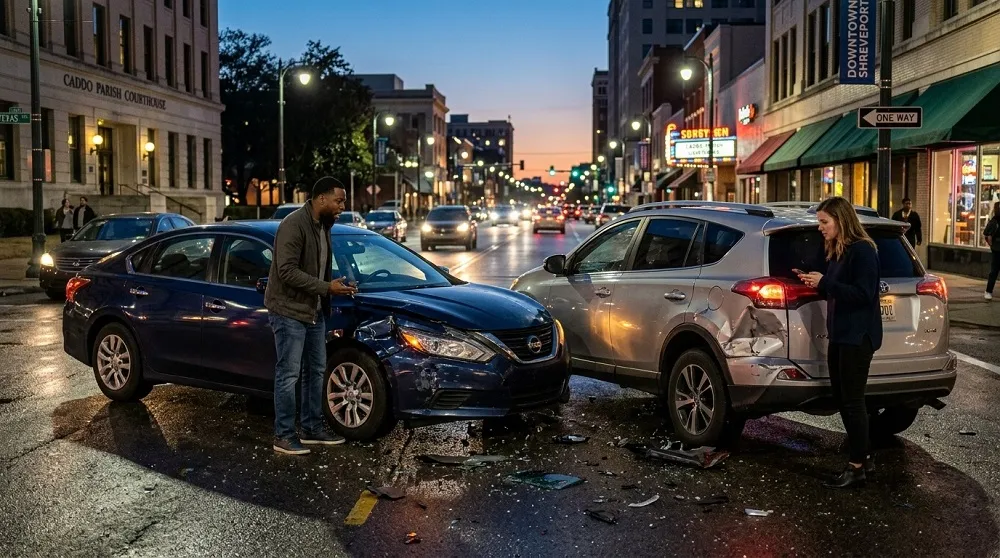
If you are involved in a collision, the “when” of the crash can be just as important as the “where”. At Rice & Kendig, we analyze crash timing to build stronger cases by investigating signal synchronization, lighting conditions, and commercial logs for trucking fatigue.
- Signal synchronization: Were the lights properly timed for rush-hour flow?
- Surveillance footage: Did lighting or visibility conditions contribute to the collision?
- Commercial logs: In trucking crashes on I-20 or I-49, does timing suggest possible fatigue or hours-of-service violations?
- Driver conduct: Was the at-fault driver speeding, running a late yellow light, or driving recklessly during a known high-risk period?
Crash timing can also shape how liability is evaluated. A collision during a known dangerous period on a corridor with a documented crash history may support a closer look at speed, braking distance, roadway lighting, distraction, and whether the at-fault driver acted recklessly in already dangerous conditions.
What Evidence Matters After a Motor-Vehicle Crash
If a crash happens during Shreveport’s highest-risk hours, several types of evidence can become especially important:
- Traffic-camera or surveillance footage
- Dashcam video
- Witness statements about speed or red-light running
- Roadway lighting conditions
- Police observations of impairment or distraction
- In truck cases, hours-of-service records
Because evening crashes often involve visibility issues, fatigue, and aggressive driving behavior, early investigation can make a major difference in how a claim is built.
Safety Tips for Shreveport’s High-Risk Hours
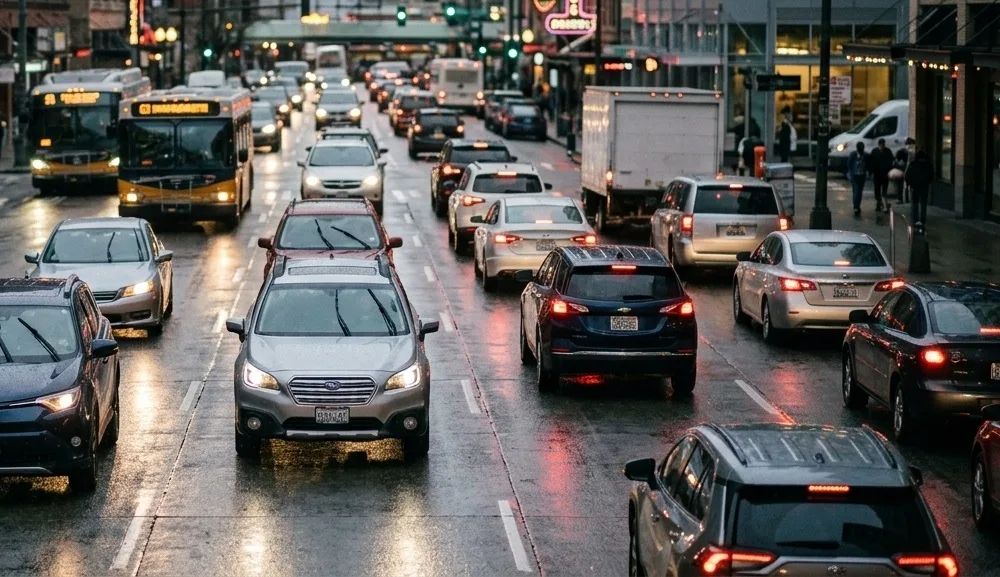
Navigating Shreveport’s high-risk corridors requires more than just defensive driving, but also a local strategy. To protect yourself during the city’s most dangerous windows, follow these essential safety measures:
- Buffer your braking: During the 4 p.m. rush on Youree Drive, leave at least one full car length between you and the vehicle in front to prevent chain-reaction rear-end collisions.
- Verify the clear: Before entering an intersection at a green light (especially on Bert Kouns or North Market), look both ways to ensure a "red-light runner" isn't approaching.
- Watch for pedestrians: Recent fatal alerts remind us to be extra cautious in lower light, especially near retail centers.
- Slow down before dusk: Lower light and heavier traffic are a deadly combination for speed.
- Avoid the "yellow light gamble": Data suggests a high rate of collisions caused by drivers accelerating to beat red lights. If the light turns yellow in a busy corridor, the safest choice is to prepare to stop rather than speed up.
Talk to a Shreveport Car Accident Lawyer Today
The statistics from 2025 and 2026 are a call to action for every driver in Caddo Parish. The "deadliest hour" is the moment when congestion, speed, and fatigue collide.
If you or a loved one has been injured in a crash on Youree Drive, West 70th, or any of Shreveport’s dangerous corridors, the team at Rice & Kendig is here to help. We use data from CARTS and the DOTD to ensure our neighbors receive the justice and compensation they deserve. Contact our experienced team today for a free consultation.

trusted advocate in Louisiana
and Texas.
Over $156 Million Recovered for Our Clients!
If you were injured on a dangerous Shreveport road, Rice & Kendig can help you pursue compensation for medical bills, lost income, and more. Get a free consultation with a local injury team today!
or Call Us
(318) 222-2772
Heading
Struggling After Your Accident? We're Here to Help.
At Rice & Kendig, our Shreveport car accident lawyers have more than 40 years of experience helping clients receive the justice and compensation they deserve. Get your free case review now!
No Fee Unless We Win For You
or Call Us
(318) 222-2772