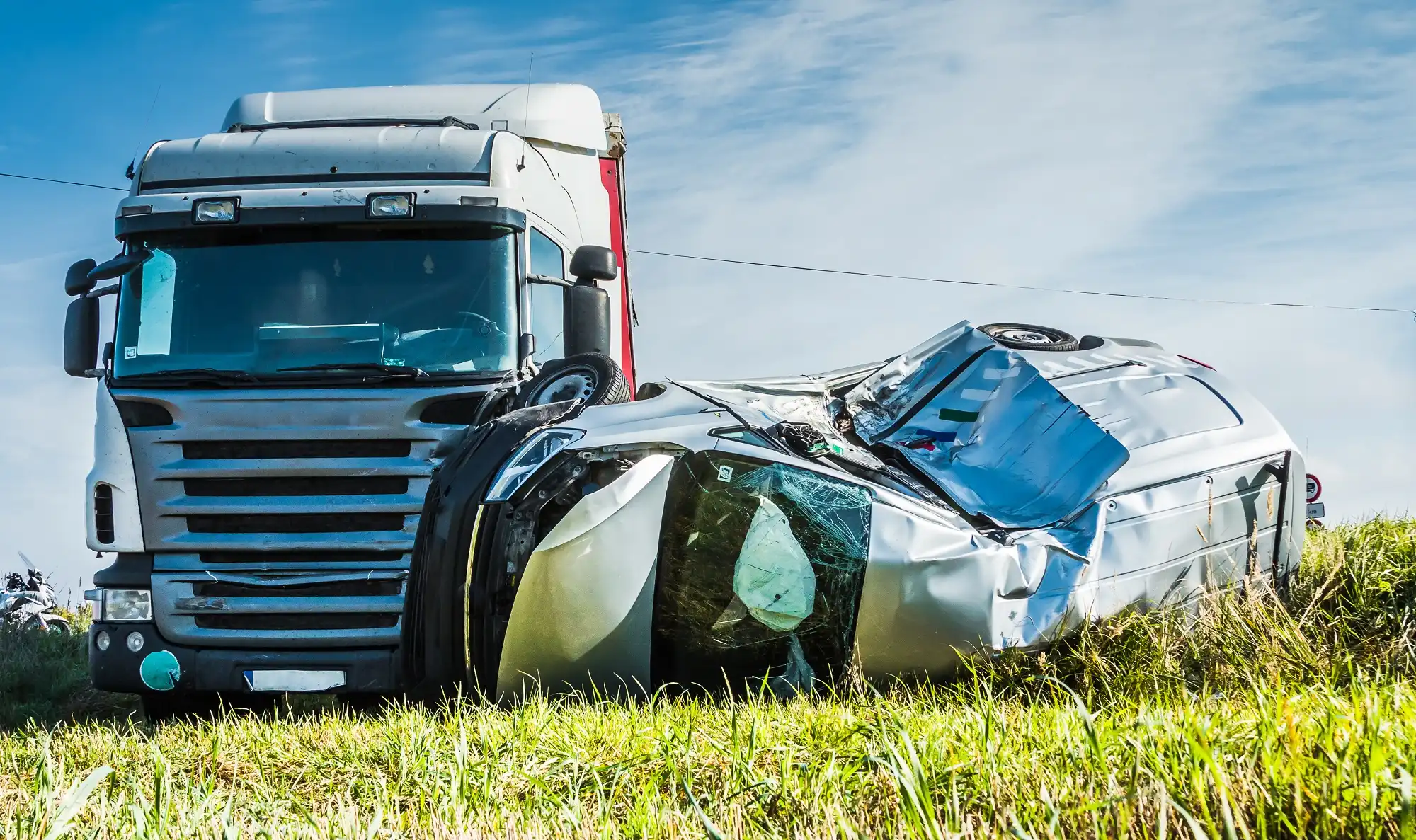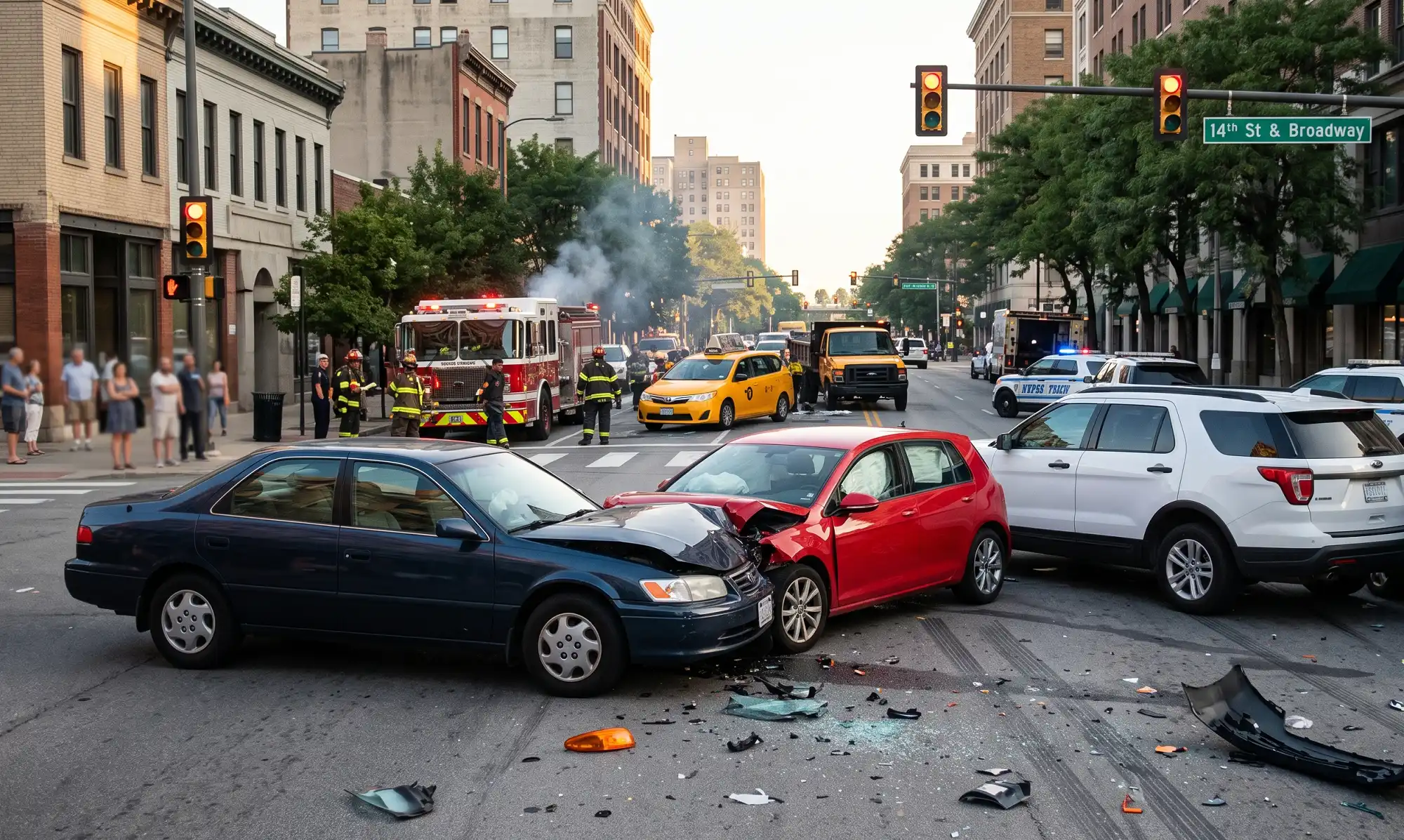
A multi-car accident can turn one crash into several claims. One driver may start the wreck, another may make it worse, and a third may deny doing anything wrong. After a pileup, every insurance company may try to shift blame somewhere else.
At Rice & Kendig Injury Lawyers, our experienced car accident lawyers help injured people across Louisiana deal with complex crash claims involving multiple drivers, insurers, commercial vehicles, and disputed fault. In these cases, the key question is not only who hit whom. The real issue is how much fault each party bears.
The Bottom Line on Who Pays After a Louisiana Pileup
In most Louisiana multi-car accidents, the at-fault driver’s insurance company pays. If several drivers share blame, several insurance companies may pay based on each driver’s percentage of fault.
A pileup claim may involve:
This is why multi-car crashes often need more than a simple police report. A strong case may require crash reconstruction, photos, video, witness statements, vehicle damage analysis, and electronic data.
The Crash Sequence Often Decides Where Liability Falls
A pileup often has multiple impacts between multiple vehicles. The first impact may start the chain reaction, but later impacts may cause the most serious injury.
Example of a chain-reaction crash:
- Driver A stops suddenly in heavy traffic.
- Driver B rear-ends Driver A.
- Driver C is following too closely and hits your car.
- Driver D changes lanes into the wreck and causes another impact.
In that scenario, the first driver may not be the only person at fault. Driver B, Driver C, Driver D, or another party may share liability.
A case investigation should answer:
- Which vehicle caused the first impact?
- Which impact caused your injuries?
- Did any driver have time to stop?
- Was anyone speeding, distracted, or impaired?
- Did poor weather, road design, or construction contribute?
- Did a commercial vehicle, defective tire, or brake failure play a role?
The crash sequence matters because payment follows proof. When a multi-car crash starts at a red light at an intersection, fault may depend on timing, speed, right-of-way, and whether a driver could stop safely in a yellow-light intersection crash.
How Fault Percentages Affect Payment After a Louisiana Pileup
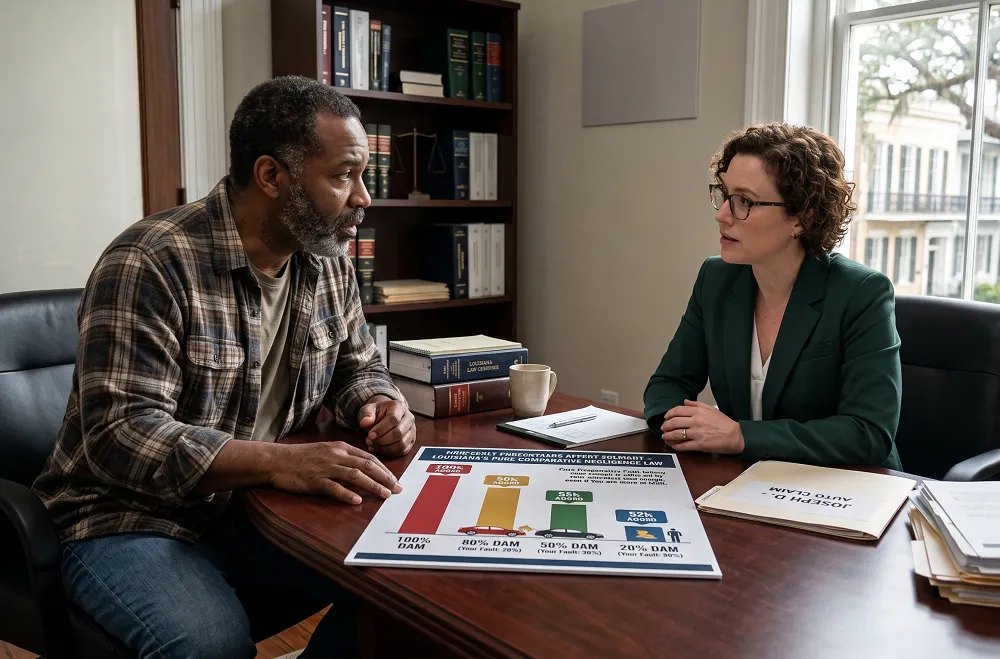
Louisiana uses a modified comparative fault rule for accidents governed by the current version of Louisiana Civil Code Article 2323. The statute requires that fault be assigned to all persons who caused or contributed to the injury, death, or loss. It also says an injured person who is 51% or more at fault cannot recover damages. If the injured person is less than 51% at fault, the recovery is reduced by that person’s percentage of fault.
Example: If damages are $100,000 and you are 20% at fault, your possible recovery is $80,000, before insurance limits and other issues.
That is why insurers fight over fault percentages. A few points can change the payout or block recovery entirely.
A driver’s fault may depend on whether they were speeding, following too closely, texting, changing lanes unsafely, failing to yield or brake properly, driving while impaired, or driving a poorly maintained vehicle. And while rear drivers are often blamed, they are not always the only ones at fault. A front driver may share blame if they cut someone off, stopped without reason, had broken brake lights, or created a hazard.
The Best Evidence Shows Who Hit Whom and When
A multi-car accident can become a battle of stories. Photos, data, and expert analysis help show what really happened.
Strong evidence may include:
- Police reports
- Photos and videos
- Witness statements
- Skid marks and debris patterns
- Dash cam, traffic, or business camera footage
- Vehicle event data
- Medical records
Louisiana crash reporting rules appear in Louisiana Revised Statute 32:398, which covers written reports for certain motor vehicle accidents.
Insurance Companies May Point Fingers Before Paying
After a two-car crash, the insurance dispute may be direct. After a multi-car accident, the process can get messy fast.
Common insurer tactics include:
- Blaming another driver
- Blaming the injured person
- Disputing the order of impacts
- Minimizing injuries
- Arguing that a prior condition caused the pain
- Delaying payment until other insurers respond
- Offering a low settlement before the full injury picture is clear
If the at-fault driver has only minimum insurance, the available coverage may not come close to covering all losses. Before rejecting a low insurance settlement offer, injured drivers should know whether the offer accounts for fault disputes, future treatment, and all available policies.
Multi-car claims often take longer than simple crashes because the car accident settlement timeline depends on injury severity, disputed liability, investigation, negotiation, and possible litigation.
Uninsured and Underinsured Drivers Can Complicate Recovery
Louisiana Revised Statute 22:1295 governs uninsured motorist coverage under Louisiana auto policies, including issues involving written rejection or selection.
UM/UIM coverage may apply when:
- The at-fault driver has no insurance.
- The at-fault driver has minimum limits.
- Several people are injured, and one policy is not enough.
- A hit-and-run driver caused the crash.
- A phantom vehicle forced another driver into the pileup.
If a hit-and-run driver caused the crash, recovery may depend on video, witnesses, physical evidence, and your own insurance coverage. Local data also shows why uninsured driver issues in Caddo Parish can create real recovery problems after a serious wreck.
Louisiana’s No Pay, No Play Rule Can Reduce an Uninsured Driver’s Claim
Louisiana’s “No Pay, No Play” rule can reduce recovery for certain uninsured drivers. Louisiana Revised Statute 32:866 says an uninsured owner or operator may be barred from recovering the first $100,000 of bodily injury damages and the first $100,000 of property damage in a motor vehicle accident.
The statute also lists exceptions, including certain crashes involving intoxication, intentional acts, fleeing the scene, felony conduct, and passenger claims.
Louisiana Filing Deadlines Leave Little Room for Delay
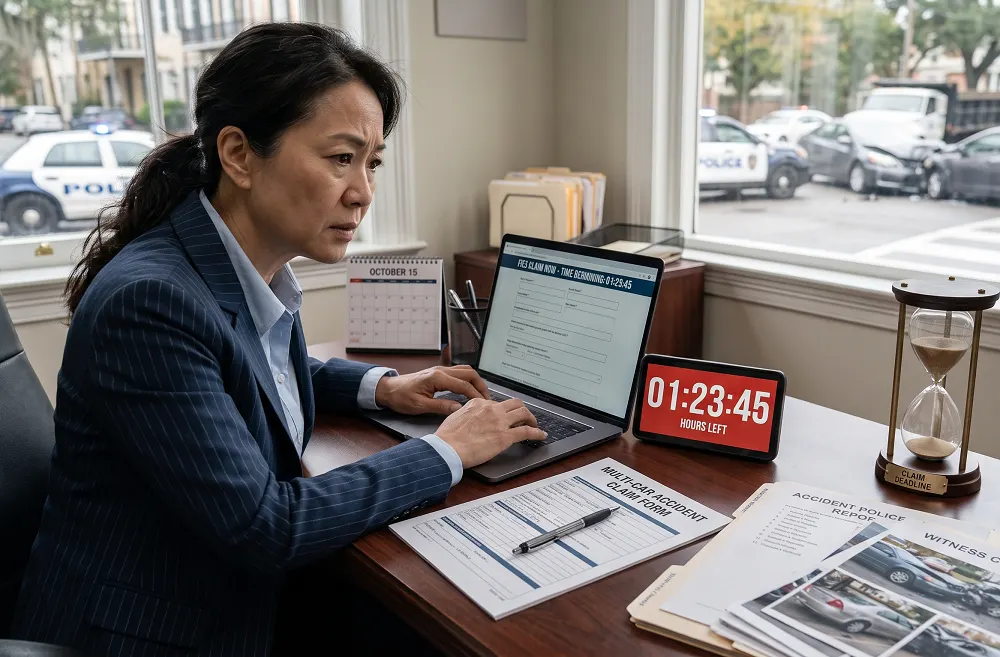
Most Louisiana injury claims are subject to a two-year filing deadline. Louisiana Civil Code Article 3493.1 provides that delictual actions (including personal injury claims) are subject to a liberative prescription (statute of limitations) of 2 years, starting from the day the injury or damage is sustained.
Some claims may have different rules. Cases involving government entities, wrongful death, minors, product liability, or other special facts may need faster action. Missing the filing deadline can end a claim before fault is ever decided. This is why it’s extremely important to contact our experienced Louisiana car accident lawyers as soon as possible after a crash.
Commercial Vehicle Pileups Bring More Defendants into the Case
A pileup involving an 18-wheeler, delivery van, oilfield truck, or company vehicle may bring more parties into the claim. In North Louisiana, I-20 and I-49 truck accident risks can involve construction zones, merging conflicts, freight traffic, and sudden stop-and-go conditions.
Potential defendants may include:
- The driver
- The driver’s employer
- A trucking company
- A broker or shipper
- A maintenance company
- A tire or parts manufacturer
- A loading company
Commercial cases may involve driver logs, dispatch records, GPS data, dash cam footage, black box data, maintenance files, and company safety policies. These records can disappear if no one acts quickly to preserve them.
Economic and Non-Economic Damages After a Multi-Car Accident
Economic damages are losses that can usually be demonstrated with bills, receipts, pay records, tax records, repair estimates, and expert opinions.
- Economic damages may include medical bills, surgery, therapy, medication, future treatment, lost wages, reduced earning ability, vehicle repairs, rental car costs, towing, and storage fees.
- Non-economic damages may include pain and suffering, anxiety, sleep problems, physical limitations, scarring, loss of independence, strain on family life, and grief after a fatal accident.
A fair settlement should cover more than just the first emergency room bill. It should reflect the full effect of the accident on the person’s life.
Early Steps Help Preserve the Proof That Will Help You Win
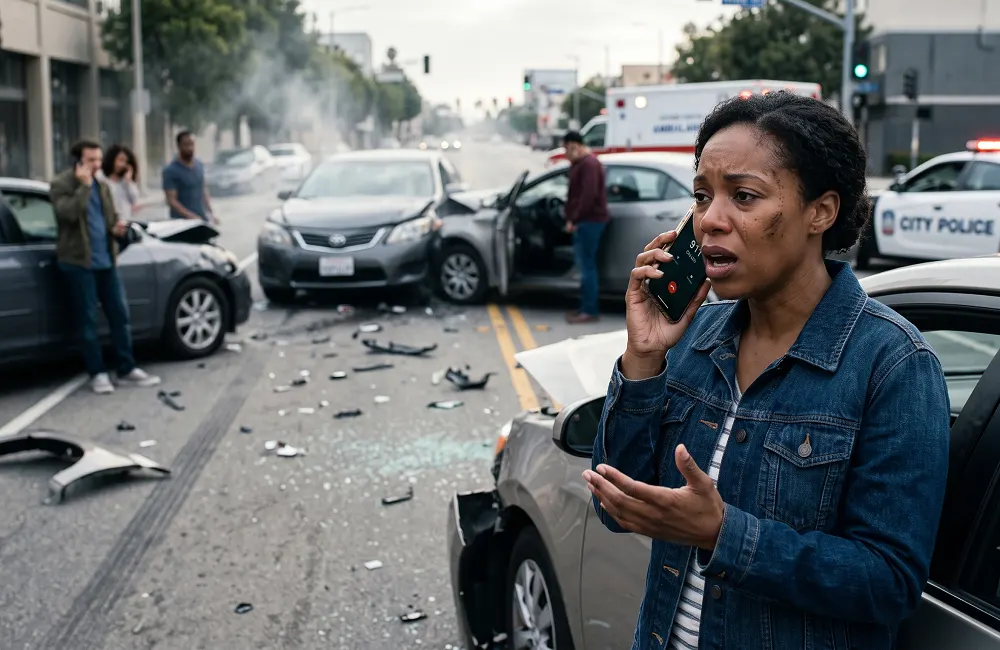
A pileup scene can change within minutes. Vehicles are moved, debris is cleared, witnesses leave, and cameras may overwrite footage.
After a multi-car accident:
- Call 911.
- Get medical care.
- Photograph the vehicles, road, signs, debris, and injuries.
- Record names, phone numbers, license plates, and insurance details.
- Ask witnesses for contact information.
- Avoid admitting fault.
- Do not guess about speed, distance, or timing.
- Save dash cam footage.
- Keep medical bills, repair estimates, and tow records.
- Speak with a lawyer before giving recorded statements.
The sooner evidence is preserved, the harder it becomes for an insurer to rewrite the crash.
Legal Help Can Keep the Fault Split from Being Used Against You
A simple fender bender may not need a lawyer. But a multi-car pileup is much different. There will be complex liability issues, with several insurers involved, and each one may try to reduce its own exposure, all trying to pay you less than what you’re truly owed for your injuries and damages.
A lawyer can help by:
- Reconstructing the crash sequence
- Finding all available insurance policies
- Preserving video and electronic data
- Locating witnesses
- Challenging unfair fault percentages
- Calculating full damages
- Handling insurer disputes
- Preparing the case for settlement or trial
The main point is direct: Liability in a pileup often requires the investigation by accident reconstruction experts and a careful, detailed description of the mechanics of the entire scene, including who was at fault, when, and how.
Rice & Kendig Injury Lawyers Can Review Your Louisiana Multi-Car Accident
A multi-car accident can leave you stuck between several drivers, several insurance companies, and several versions of the same crash. You should not have to sort through that alone while dealing with injuries, missed work, and vehicle damage.
Rice & Kendig Injury Lawyers can review the crash, identify the parties who may be responsible, and pursue payment from the available insurance coverage. To talk about a Louisiana pileup, chain-reaction crash, or disputed liability claim, contact us today.
trusted advocate in Louisiana
and Texas.
Don’t Let a Pileup Cost You Twice
Injured in a multi-car crash? Rice & Kendig Injury Lawyers can find every responsible driver, handle all the insurance companies involved, and fight for the money you deserve.
or Call Us
(318) 222-2772
Heading
Struggling After Your Accident? We're Here to Help.
At Rice & Kendig, our Shreveport car accident lawyers have more than 40 years of experience helping clients receive the justice and compensation they deserve. Get your free case review now!
No Fee Unless We Win For You
or Call Us
(318) 222-2772