







How Shreveport Intersection Accidents Actually Happen
Every Shreveport intersection runs on trust. Drivers trust a red light to stop cross traffic, a stop sign to hold, and the driver waiting to turn left to actually wait. After handling intersection cases across Caddo and Bossier Parishes, our attorneys continue to see the same handful of mistakes recur over decades of legal practice.
-

Red Light and Stop Sign Violations
Drivers rushing through changing lights or rolling past stop signs create instant hazards. Fortunately, Shreveport’s newer signals log timing data and local businesses often capture surveillance footage. This readily available evidence, combined with crash reconstruction, transforms a “he said, she said” dispute into a provable claim.
-

Failure to Yield on a Left Turn
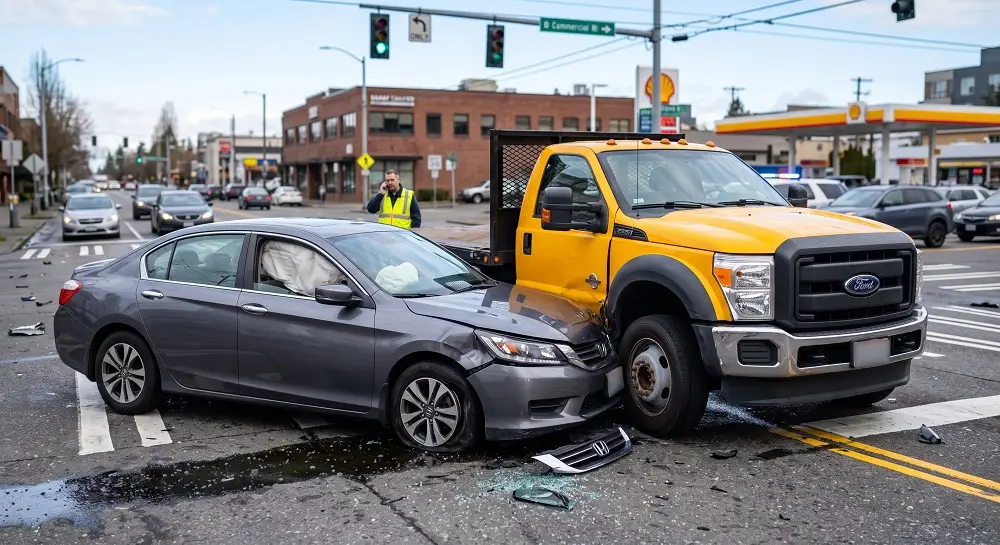
Left-turning drivers have to judge the speed of oncoming traffic and find a safe gap, and many serious wrecks trace back to a driver who guessed wrong or turned without a clear sightline. Because the turning driver is broadside to the oncoming vehicle for a moment, these crashes frequently produce severe side-impact injuries.
-

Driver Distraction at the Wheel
A glance at a phone for even two seconds is long enough to miss a changing signal or a pedestrian stepping off the curb, and distraction is one of the most common threads running through Shreveport crash reports. When we suspect distraction played a role, we can request phone records and vehicle infotainment data to show what actually held a driver’s attention in the moments before impact.
-

Drunk or Impaired Driving
Alcohol and drugs slow reaction time and distort judgment right at the moment an intersection demands both. A driver who’s been drinking is far less likely to stop in time for a changing light or to correctly judge a gap in traffic before turning. If impairment was involved in your crash, our skilled Shreveport DUI accident attorneys can pursue compensation from the driver, and where the facts support it, from whoever kept serving them.
-

Blocked Views and Blind Turns
Parked trucks, overgrown landscaping, and poor sightlines at certain Shreveport intersections make it genuinely hard to see cross traffic until it’s already too close to stop safely. When a property owner, a business, or the city itself created or ignored that obstruction, more than one party may share responsibility for what happened next.
-

Excess Speed Through a Yellow Light
Accelerating to beat a yellow light instead of slowing down gives a driver far less room to react if cross traffic is already committed to the intersection. It’s one of the most common causes of the high-speed, T-bone-style collisions that tend to produce the most serious injuries on this list.
The Injuries an Intersection Crash Leaves Behind
A rear-end collision usually pushes you forward and back. An intersection crash hits from an angle you may never have seen coming, and that difference shows up in the injuries. Our clients most often deal with the following:
- Fractures and pelvic injuries: The side of a vehicle offers far less protection than the front or rear, so a T-bone impact can crush the pelvis, hips, or ribs. Recovery often means surgery, hardware, and months of limited mobility.
- Traumatic brain injuries: A driver’s or passenger’s head can strike the window or door frame during a side-impact hit, even with airbags deployed. Some symptoms, like memory trouble or personality changes, don’t show up for days.
- Spinal cord and back injuries: The twisting force of an angled collision puts unusual strain on the spine, and it’s common to see herniated discs or nerve damage that requires long-term care.
- Internal organ damage: The seatbelt and door frame can compress internal organs during a side-impact crash, and that kind of bleeding often isn’t obvious right away. This is one of several reasons we tell every client to get checked out the same day, even if they feel fine.
- Psychological trauma: Watching another vehicle close in from the side with no way to avoid it leaves a lot of survivors with real, lasting anxiety behind the wheel. We routinely account for counseling and therapy costs when we calculate what a claim is actually worth.
What Your Intersection Accident Claim Could Be Worth
Louisiana law separates a personal injury claim into distinct categories of damages, and knowing the difference matters when you’re negotiating with an insurer. Here’s how our attorneys typically break down what an intersection accident claim can include.
Economic Damages
Economic damages cover losses that have a dollar amount attached, such as a bill, an invoice, or a pay stub. These are the costs a jury or an adjuster can calculate directly rather than estimate.
- Emergency room, ambulance, and hospital costs
- Surgery, follow-up care, and physical therapy
- Anticipated future medical treatment tied to your injuries
- Lost wages and reduced earning capacity
- Vehicle repair or replacement and related property damage
Non-Economic Damages
Non-economic damages compensate for harm that doesn’t have a direct monetary value but is just as real. Louisiana’s foundational tort article, La. Civ. Code art. 2315, allows recovery for these losses alongside your economic damages.
- Physical pain and suffering, present and future
- Mental anguish, anxiety, or PTSD tied to the crash
- Loss of enjoyment of life and disruption to daily routines
- Permanent scarring, disfigurement, or disability
- Loss of consortium for a spouse or family member, where applicable
Punitive (Exemplary) Damages
Louisiana law disfavors punitive damages and only allows them when a specific statute authorizes them, unlike the economic and non-economic categories above. The clearest example in a crash case is La. Civ. Code art. 2315.4, which permits exemplary damages when a driver’s intoxication was a cause of the crash and the conduct rose to a wanton or reckless disregard for others’ safety.
What to Do in the Hours After an Intersection Crash
The choices you make right after a crash, medically and otherwise, can shape your recovery and your claim for months to come. Here’s the order we’d walk you through if you called us from the scene.
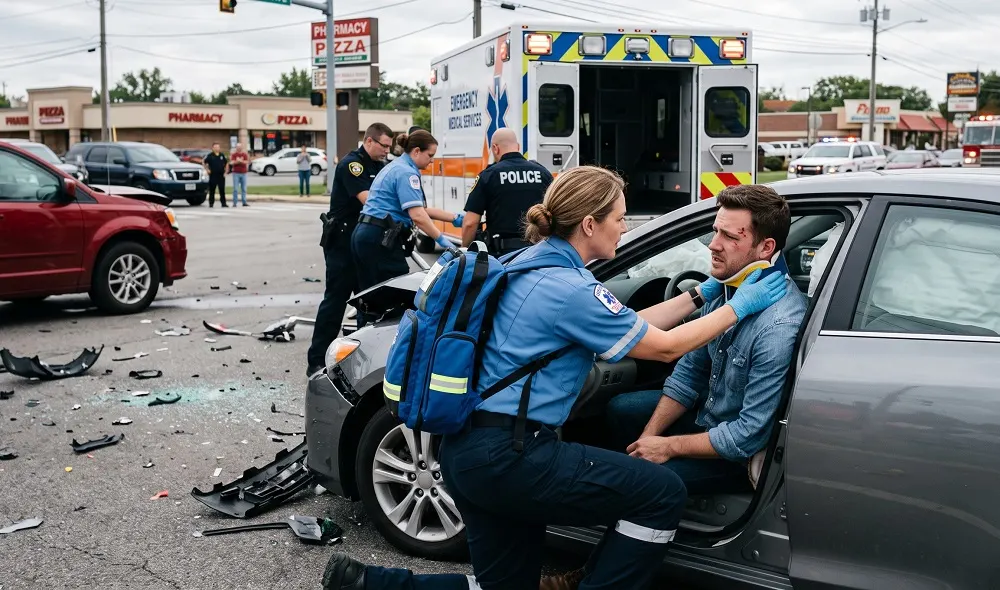
1. Get Checked by a Medical Provider
Even a side-impact crash that feels minor can mask internal bleeding or a concussion that hasn’t announced itself yet. A medical record created the same day also becomes one of the strongest pieces of evidence tying your injuries directly to the crash.
2. Document the Intersection Itself
Photograph the traffic signals, stop signs, skid marks, and the locations where each vehicle ended up before anything is moved or repaired. A picture of a malfunctioning signal or an obstructed stop sign can later become key evidence of fault.
3. Request the Police Crash Report
Officers who respond to a wreck at a Shreveport intersection will note the signal status, right-of-way, and witness statements in their report. Get the report number before you leave the scene so we can pull the full report for you.
4. Keep Your Statements to a Minimum
Don’t guess at fault or apologize at the scene, even if you’re genuinely not sure what happened. Insurance adjusters will comb through anything you post online or say on a recorded line, looking for anything they can use against you later.
5. Call Rice & Kendig Injury Lawyers Before You Talk to the Other Insurer
An adjuster who calls quickly after an intersection wreck is usually trying to lock in a low number before you know the full extent of your injuries. Let our Shreveport intersection accident attorneys handle that call instead, so nothing you say is taken out of context and used against you to shrink your claim.
Shreveport’s Most Dangerous Intersections, According to Police Data
Not every intersection carries the same risk. A 2026 Shreveport Police Department crash report names Bert Kouns Industrial Loop at Mansfield Road as the city’s most dangerous intersection, with more high-crash spots clustered along Youree Drive. If your crash happened near one of these, that’s worth mentioning when you call, since we already know the traffic patterns and history at these locations. Wherever your crash happened, the same rule applies: the sooner the scene and the signals are documented, the stronger the case.
Louisiana Intersection Accident Law: What Changed and What Didn’t
Louisiana’s rules on fault, filing deadlines, and insurance have shifted multiple times in the past two years, and a claim built on last year’s version of the law can cost you money. Here’s what actually applies right now.
Filing Deadlines Changed in 2024
For crashes that happened before July 1, 2024, Louisiana gave injury victims one year to file suit. For crashes on or after that date, the window is two years under La. Civ. Code art. 3493.1. Waiting even a few months to speak with an attorney can still cost you access to evidence that doesn’t wait around, like intersection camera footage that gets overwritten on a loop.
Right of Way at Louisiana Intersections
Under La. R.S. 32:121, Louisiana law generally requires the driver on the left to yield to the driver on the right when two vehicles reach an intersection at approximately the same time. A driver turning left has a separate duty under La. R.S. 32:122 to yield to oncoming traffic already in or near the intersection. If the signal itself was dark or malfunctioning at the time, La. R.S. 32:232.1 treats that intersection as an all-way stop.
Louisiana’s New Comparative Fault Rule
Louisiana used to allow an injured driver to recover some compensation regardless of how much fault they personally bore. That changed for crashes on or after January 1, 2026: under the amended La. Civ. Code art. 2323, a driver found 51% or more at fault for their own crash can no longer recover anything, while a driver found 50% or less at fault still recovers, reduced by their share of fault. Crashes that happened before January 1, 2026 remain governed by the prior rule, so the date of your crash, not the date you file, decides which version applies.
Minimum Insurance Coverage in Louisiana
Louisiana requires drivers to carry at least $15,000 in bodily injury coverage per person, $30,000 per accident, and $25,000 in property damage coverage under La. R.S. 32:900. Those minimums often fall well short of covering a serious intersection collision, which is one more reason our Shreveport intersection accident lawyers look at every possible source of coverage, including your own uninsured motorist policy, before we ever value your claim.
Louisiana’s “No Pay, No Play” Law
Under Louisiana’s “No Pay, No Play” law (La. R.S. 32:866), for accidents on or after August 1, 2025, uninsured drivers cannot recover the first $100,000 for injuries and the first $100,000 for property damage. But there are several potential exceptions to this law that one of our experienced attorneys should review and evaluate as soon as possible.
Had the Right of Way and Still Got Hit? We’ll Prove You Weren’t at Fault.
The pain, the bills, and the missed paychecks are real, and you deserve to be paid fairly for all of it. Rice & Kendig Injury Lawyers bring the experience and the resolve to fight for the compensation you’re owed.
No Fee Unless We Win For You
or Call Us
(318) 222-2772